Monday, 1 October 2007
FROM THE TOP LEADERSHIP TRANSCRIPT NOW ONLINE
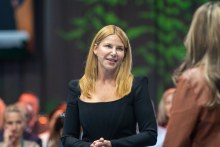
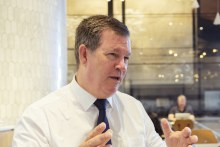
The organisations that do best over time are those that prepare a ready supply of future leaders, wiring leadership capability into the corporate bodys DNA. At an AFR BOSS roundtable in October last year, executives from firms on the local list discussed what works. They included Lion Nathan chief Rob Murray and head of people Bob Barbour; Tony Crawford, CEO of DLA Phillips Fox; Keith Tempest, CEO of NZs TrustPower; and ANZs head of breakout and culture, Siobhan McHale.
Transcript
Leadership has become an overused word but as a business imperative it is only growing in importance. Recent research by Hewitt Associates and RBL Group examined the practices of more than 563 companies around the world. TheTop Companies for Leaders list ultimately included the likes of General Electric Company, Procter & Gamble and Nokia Corporation, IBM, BBVA of Spain. Australia's ANZ Bank came in at number 18 on that list.
The research found that three characteristics make leadership a critical part of the company's organisational fabric. Leadership practices at the top companies are part of the cultural fabric. Leaders in those companies actually role model they lead the way and maintain the focus on talent development hrough very practical, tightly aligned programs. Ultimately they reach a tipping point when leadership becomes almost self perpetuating.
At a recent BOSS roundtable, executives from firms on the list discussed what works. They included Lion Nathan chief Rob Murray and head of people Bob Barbour; Tony Crawford, CEO of DLA Phillips Fox; Keith Tempest, CEO of NZ's TrustPower; and ANZ Bank's global head of breakout and culture, Siobhan McHale; Stockland's general manager of organisational development and HR Chris Akayan and CEO Matthew Quinn added some comments.
Also participating was one of the global judges, University of Technology Sydney's distinguished professor Dexter Dunphy, and David Brown, managing director of Hewitt Associates.
This is an edited transcript.
BOSS: What is it that sets these companies apart from the rest?
David Brown: This whole issue of leaders genuinely getting this, leading this way, walking the talk. You've only got to pick up the diary of a leader in these organisations and have a look at where they spend their time compared to another organisation. We see they spend 30 per cent more time on leadership issues whether that is getting involved personally in interviews for selecting people, coaching, mentoring they're there 30 per cent more than in other organisations. We see they are role modelling those behaviours; whether it's the boards or the senior teams, they will regularly be the first person to put up their hand.
And increasingly we're seeing much more of a focus on personal character, we're seeing this shift from positional power to personal power. So no longer is the focus 'I'm in the bigger job, therefore do what I say.' There needs to be an increasing focus of leaders on character and some of the interpersonal skills. If you look at development profiles, what we're seeing is an increasing emphasis on behavioural issues there's been a significant jump there. That's around leaders walking the talk.
The second area is how they're growing and developing leaders within their organisation. Experience is the best teacher. So it's how do we take five years and crunch it into two with respect to the way we're developing people. As we're seeing this reduction in cycle times within organisations, speed is of the essence, so how do we do that? We increasingly throw people into the deep end more. People are thrown bigger challenges earlier, faster, but are given support. They are being given developmental experiences twice as much as in other organisations. They're being popped into a development experience rather than being sent to do lassroom training. The focus is on thinking about not only today's skills but the future needs of the organisation. When we spoke with the leaders in these top companies, they were building capability for future needs, so they were in touch with what talent trends are coming our way and how we're going to start to work towards that.
Also, selection is just as important as retention: with the best, 85 per cent of their leaders were selected from within, versus 32 per cent in other companies. That was a massive difference. That was one of the mantras we heard from one of the leaders it's just part of every leader's responsibility to have two in the bank, ready to take over from me. So a real focus on development.
The third area was around alignment of leadership development to business strategy. The best organisations were very clear about what their value drivers organisationally were. So if the value driver is operational efficiency, then all their leadership development has a very heavy operational efficiency bias to it. If it's about customer intimacy, they will focus on customer intimacy. They will align to the business strategy rather than looking at it from the perspective of the sheep dip one size fits all.
ROB MURRAY: If you look at the emphasis over our last three years it's been in a couple of areas: first is a need to connect leaders to their values, and to really help them feel comfortable that the person out of work and the person at work had the same values. I was as an ex-Proctoid (Proctor and Gamble) not happy with the word 'competencies'. It all sounded like management gobbledygook. Bob and I thought long and hard and went back to the research and really tried to identify what behaviours leaders exhibit that drive success in business and correlate with constructive behaviours that we know correlate with business success. That boiled down to 10. And we measure people in terms of behaviour times [multiplied by] results so ultimately if you did deliver great results with the wrong behaviour we'd ask you to leave the business.
The behaviours are really simple. Things you can understand like trust people, do the right thing for the long term, be authentic they're not complicated behaviours. They're things people can identify with.
And when we talked to people about performance you have to, as a leader, use examples; you can't share an opinion. You are not judging characters, you are judging real performance, which is what the reviews are about. So you had to have real examples of when people exhibited certain behaviours either positively or negatively.
The last part of that journey over the last three years has been trying to work out how we connect a very positive culture with those who really determine our economic success basically our customers. How do we use the positive culture within Lion Nathan to engage our customers and consumers and our own people so that ultimately we get their discretionary effort? They go the extra mile, they advocate our products over someone else's, they love and adore our brands and
BOB BARBOUR: One of the approaches we use is to try to make sure we build the right kind of culture. Culture is about behaviour at the end of the day. So a core business strategy now is to demonstrate the right behaviours to build good relationships between people in the business, and with ustomers and consumers. One of the things we look at when we're hiring people is to make sure they're going to fit the culture, and that includes the CEO. So I did get quite involved in the CEO selection process, including giving candidates feedback through the process on things they could work on, including their strengths. It's important for us and the board to do that for them and to make sure from a behavioural point of view they're going to be consistent with what we espouse. We take a long-term perspective.
We do that as much as we can with everybody we hire. We try and check on them, versus the behaviour times results model. There's no ideal or precise selection technique, so you get it wrong at times. But we try and do it not just by the normal structured interview process but by actually socialising with them as well. One of our core values is about being sociable.
RM: Our internal success has gone through the roof. We're replacing so many more of our own leaders with our own people than we used to 83 per cent. We had a goal of 80 - we're a bit above that now. It's quite different from where we were a few years ago.
BOSS: Tony Crawford, is it a different issue in a partnership?
TONY CRAWFORD: The legal services industry is white hot in terms of the competition, particularly for the best talent. And when we sat down to look at our strategic priorities a little over three years ago, we were looking at a market average of a little over 25 per cent turnover that's the industry average over the last three years. So, one in four lawyers on average from each law firm would go somewhere else.
When we sat down to ask ourselves what should be among our top strategic priorities, this leadership issue hit us in the face. We couldn't avoid the conclusion that if we didn't put leadership development at the top of the list we weren't going
That would not have happened without first starting with our partners, to get them to accept the critical importance of leadership. It's not been the thing people usually put at the top of the list. We've spent quite a bit of time educating, or at least sharing the understanding of the importance of the issue.
In a partnership you do really lead through coalescence and pursuit of common goals. The directive approach has
On average, we have a turnover rate below 20 per cent over the last three years, which is fantastic. And the knock-on impact in terms of the firm's performance and effectiveness has been sensational. So we're zealots for the concept. We measure the engagement score of our people every year. We've got the metrics and the benchmarks we've been working to, and the feedback we get from those surveys gives us a little bit more information on what levers we can pull and what issues to focus on.
DEXTER DUNPHY: Can you put a financial figure on what's saved you?
TC: It's a bit rubbery but others who've looked at it would suggest that between $100,00-$150,000 would be the sort of leakage that would occur in good lawyers that you lose from the business. To give you a bit of perspective around this, the industry average for lawyers who are in the two-to-three year category, the turnover is 42 per cent. So this is business critical.
BOSS: Is this a recent phenomenon?
TC: It's been building over the last 10 years, which is a function of a number of things. The changing preferences of various generational differences we see, underpinned mostly by the intensity of the competition and the complexity of the work we're doing. With that is the pressure of the fairly intense context people are operating in.
KEITH TEMPEST: We've taken a slightly different model. Many organisations strategically look at the bottom line. I've always been of the view that we all need to belong to a community, hopefully a constructive community. So within our family or little area, people like to get involved. So at TrustPower we said as a company we want to be a community ourselves, but we want to be a major participant in the broader community. We've got about 15 per cent retail market share in customers, and that's mainly in regional/rural New Zealand. What we do is we have built from a cultural perspective, identifying the needs, and therefore reflecting the behaviour of being a part of the community. That civil, behavioural, caring for each other, sharing all that participative stuff, that is reflective of a very functional community. We also spend an enormous amount of time out in the community with awards and different programs voluntary organisational awards.
The commercial impact that we achieve across the country is a minimum of 10 per cent but up to 15 per cent price premium for our electricity. We charge seriously more than our competitors. Our market share is growing. So we focused on not just price premium but quality. So, we're a community. Therefore people can identify a bigger purpose than just coming to work and making money and having a good time and learning and growing and developing. We get all of our staff involved in our external community programs, so they really feel involved in the broader community. The reason people need to behave in an appropriate manner is that they are rewarding everyone, not only themselves their colleagues, the internal culture, and they are also contributing externally. As a result of that driver people are really passionate; they have a bigger purpose than just shareholder value. And the shareholder value for TrustPower compared to our competitors has been enormous.
BOSS: How much time at ANZ do you spend developing talent?
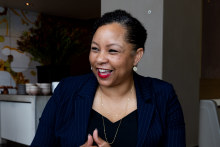
SIOBHAN MCHALE: It's a difficult one to gauge exactly but it is a lot more than when we started in 2000. I think people thought they were leading in a constructive way but when we did surveys, what we saw were leadership behaviours more aligned around force rather than the power of persuasion. There was a lot of hierarchy, bureaucracy, long hours, risk aversion.
I think people are not spending more time on leadership, but the approach that they're taking to the role of leader is very different now. So they're using practices around how to engage people on the journey, and the meaning of the journey. So meaning-making becomes a key behaviour for leaders. Why should somebody follow them?
So they're spending more time with people coaching, mentoring, giving feedback, and the data that we have now shows that that is making a difference to our people and to the results we're getting from the business perspective. It's more what you do with your time as a leader; rather than micromanaging and expecting people just to follow you because you tell them, it's allowing people to be more empowered.
One of the stories in our business is around the local CEO networks, where we've actually devolved responsibility for running the branch network to what we call local CEOs. Then they've got a cluster of branches underneath them with profit and loss responsibilities.
We empower them with responsibility to run that business. We say, it is yours, you do have that responsibility, you also have the accountability for producing the results. We don't micromanage them. We ask them to produce what we're expecting them to do and get on with it and the results speak for themselves.
We've also tried to adapt the way that we manage and lead our people by empowering them to become leaders and step up. I think the other thing that we have done is have as one of our five values 'lead and inspire each other'.
Any one of 33,000 people at ANZ can be a leader and they're giving people the tools and techniques to make that a reality in their own business units in whatever way makes sense in the units. It's not a one size fits all, but that encourages a leadership culture.
Then the thing about measuring not just what is produced but how it is produced is one of the key benefits of the engagement survey. We've gone from 49 per cent staff satisfaction to now being in the high performance zone. In 2004 it was 85 per cent and then we switched to a tougher measure, engagement, which is more linked to productivity.
Our people are saying they are being led by people who now listen to them, they are more empathetic and they are better able to create the story of 'why should I follow you'. And the story that is meaningful for people now is more about not just 'I can come here and earn a wage', but 'how can I have more fulfilment in my job and give something back, not just to the task but to society?' And that's what is hooking people in. So that's how we're tending to attract and retain people is that they get an experience of contribution that moves beyond task.
CHRIS AKAYAN: Property is a very down to earth and pragmatic, and we've spent quite a bit of time early on defining what leadership means in terms of behaviour for us, what's relevant to Stockland and our people. And I think importantly it's linking it to metrics, so part of every leader's performance scorecard is 20 per cent of their bonus. I think it's more than just that extrinsic motivator, it's how you actually engage them on what's in it for them from an intrinsic perspective in term of who they are, how they land on others, and does that help or hinder them in terms of achieving business results.
And I think as people start to see that they take more personal ownership. I think the other thing we've done is keep it simple.
We're all limited in time so when we have our talent management discussion, we want more of the conversation to be about the people than the model or the process, so that limited time we have we use to have conversations that identify people's direct development opportunities, finding the right things for them to do in terms of accelerating that growth. There's a strong focus on making those processes relevant to our culture and our people and to maximise the time that we do have for good dialogue and quality outcomes.
We've been fortunate to have somebody like Matthew Quinn, who lives this like the CEOs around this table do who can understand the intricacies of the talent management program and talk to it when we go to the board and really live that. That makes a huge difference; it sends a signal. The board is quite engaged around things like talent management. They're intimately aware of who those people are, how they land, and so you get the vast connection on all levels around these things.
MATTHEW QUINN: Its very performance focused. People confuse the two and think it's soft. It's not.
BOSS: One of the challenges is to bring ANZ in transition to a new leader. How does your organisation adapt to that change?
SM: Currently we're challenged in terms of identifying people even locally, so how do you build that pipeline in Asia? One of the things we have to do better is to widen the lens on what talent looks like to [include] people who are culturally and gender diverse and getting that pipeline flowing through.
A lot of the work we are doing is scanning the market for people looking to work in Asia, whether that's growing them internally or recruiting them from outside. So we unblock the pipeline that exists in many organisations, as we're not getting enough women through into senior positions.
All of our processes are around ensuring we have succession plans in place for new people, so at senior level and at top 300 positions, each person has at least two successors identified to take their place when they move on. There has also been a process to constantly change people into different roles, so you spend two to three years in a role then move on to the next challenge. Our view is we have to make this transition to the new CEO as seamless as possible by having that succession plan in place for new people. I'm sure Michael will be wanting to shift the decks and moving people around too.
BOSS: Do you find nonetheless there is uncertainty, a vulnerability at that point?
SM: Any transition of CEO there is going to be a turnover at senior levels, and perhaps that's a good thing as well. At any ransition point there is a certain amount of anxiety, but that adrenalin can produce even higher performance.
BOSS: What are some of the obstacles to ensuring this leadership capability builds and endures?
TC: I think the main obstacle as I would see it is keeping the momentum going, and the momentum in my view will continue provided we are stretching the understanding throughout the whole organisation, getting it down to the receptionist. We've been on our journey for three years and I don't think we're down to that level yet. But ask me in two to three years hopefully we will be. We've started with our partnership group and below that with our senior associates, and are cascading it through the organisation. Obviously getting data and measurement and feedback that you can rely upon is important. It has to be reliable. When we get our survey feedback each year we've got the very rich pool of information we can draw upon to work out what the next stage looks like.
BOSS: What are the most important metrics?
TC: I've mentioned turnover figures, which are clear indicators but they are more lag indicators than future looking. I think engagement score is the most important for us. But boiling it down to the emotional competency inventory we take every couple of years is very important also. Our engagement scores are at 58 per cent at the moment; we're on the cusp of that high performance score and we've had three years year-on-year improvement.
RM: I personally think the barrier is self. If you don't reinvent yourself and the culture and strive for improvement, strive for change, constantly challenge yourself, this can become very internalised. It can become the happy clappy club and the self aggrandisement club. Really it should end up in concrete business results. I think it's great to measure the engagement of employees and it's lovely ours is 73% or whatever it is and we love all of that. But all of that is internalised.
What's the engagement of your customers, of your consumers? Do you get the discretionary effort from the groups that ultimately drive your economic success as a business? And do you make more money? If you do those things, whatever you've chosen as the economic scoreboard of the business should respond. Otherwise all of this is a waste of time.
For us, we're very clear on what that economic scoreboard is, very clear on how we measure the internal engagement of our employees. And our focus now is on consumer engagement. Customer engagement has been relatively easy to manage. Measuring it with an increasingly on-my-own-terms consumer is challenging.
BB: We know from work we've done with customers is that they prefer constructive behaviours as well. Of course they're going to want someone who, like a sales executive, will do what they say they'll do; someone who's quite humanistic, encouraging, listens to them. Of course they're going to want someone who is highly affiliative. And they won't want someone who is highly avoidant, which is the primary style of people in Australia and NZ. And they won't want someone who is highly competitive, who's interested in themselves or selling things to them they don't want. And you try to get people to focus externally, to deliver constructive behaviours externally in a way that engages customers. because you will get the same outcomes and the customers will stay with you
DB: One of the things we've seen is with this reduction in cycle times leaders are shifting their tendency to behave one to one and moving it to one to many. Our sense is the top companies are working very hard to resist that tendency and stay one to one. Community is absolutely important, but communities are created one conversation at a time. So the great leaders are still maintaining the one to ones. And so many organisations we see almost delude themselves that when they think they get everyone together they are cutting through. Everyone says no, you are not actually interacting with me.
CA: Just back on the metrics, everyone is assessed on four areas. The financial performance is paramount. There's your people leader component. That connects to performance, but it is in and of itself how you generate engagement in your team that positions you favourably to attract in a tight labour market and to generate the right behaviours to achieve results.
KT: A catchcry is to do real things for real people. It's been very specific because in a corporate sense sometimes you can get deluded about stuff. If you put that other hat on that new program you are going to do, is it real and will it appeal to real people? then it creates a focus. Then you come back to the leadership development pipeline. If we're asking people to move from here to there, is it real for the organisation? It is keeping both feet firmly on the ground: asking does it matter, is it important, is it real and will it benefit real people? It's easy to get diverted.
BOSS: At what point are these qualities tested? We talk about the acid test.
SM: I think they're tested in transition and we talk about the transition from individual contributors and managers to managers' managers' managers, business managers and managers of an enterprise. So what we've done is identify people that are likely to derail most. And it's also the most likely to learn in that situation. Lost in transition that's where we give them the leadership development intervention, and it's not just a two or three day program, it's a 90-day edge plan because we know if you go on a workshop you lose 90 per cent of that data/information. It's when you develop into a ritual.
MQ: When things are going well you could easily become complacent and say 'we don't need to do the things we do'. Adversity is the true test. If they [(leaders] go to jelly if they are calm, relaxed role models in good times and start banging the fists in the bad that's not the way.
RM: We try to coach intensively, focus on our young leaders. It's all about acknowledging that need. It's easy to pump them up and make them feel great about themselves, particularly this generation, because they have almost limitless knowledge. Every question can be answered by Google, if not mum and dad. They substitute that and believe that that actually also constitutes wisdom and experience, and it doesn't, it constitutes knowledge. That's all it is, knowledge. The knowledge generation is not necessarily the wisdom generation.
BOSS: How are you adapting your organisation's leadership to the younger generation coming through?
RM: If you challenge them they stay, they choose to stay. The other thing is to watch, I think, the doctrine of that generation we've got every bit of knowledge at our fingertips, there's no problem we can't solve. It's incredibly powerful. It's fantastic if you can get behind that and think they can conquer the world. I think it's important not to just beat them with the mantra of leadership, leadership, leadership and self-predestination and determination, but actually to surround them with really robust 'this is the way we do things around here' processes. All this stuff about yes, you want transition and yes, you want training you do need to establish, in my view, that this is the way we market things and this is the way we sell things; this is the way we work. And you have to have really robust capabilities and processes as well so they can slot straight in to it.
We're increasingly trying to introduce that into our factory environment, which has historically been unionised. A very different viewpoint to this has always been at a time that we're investing in our business and changing the way we do things. I do think it's important to surround people with 'this is the way things happen here', because as the world moves more quickly you can't have very talented leaders reinventing every process every time they do it.
BOSS: If we had to take the temperature of leadership in Australia these days, how would it be?
DD: We've had so many inquiries into leadership in Australia and they all say it's dreadful! One of the new things I hear in these kinds of companies is the dual emphasis on performance big tick, that's important but also on the process by which that performance is reached. And the remark was made there about would you actually fire somebody if they get there with the wrong process by using the wrong behaviours.
That balance is quite difficult to achieve. The new part of that is not the emphasis on performance but the emphasis on the quality of behaviour 'constructive behaviour' is one of the terms used. Defining that constructive behaviour and relating that to a particular industry and client groups and so on, because it will vary, but generally it is constructive behaviour. It's a good way to raise families, it's a good way to build communities, it's a good thing for interpersonal relationships.
In other words there are common elements there, but there's also a point at which the behaviour becomes differentiated because of the strategic differences between different parts of the organisations or between different organisations and industries.
The thing I find remarkable is this new attention to the quality of behaviour and its importance in the long term in maintaining results, making them sustainable. It's easy to get good short-term results by beating up on everybody then moving on and letting the next bunny take your place and pay the consequences. And we've seen a lot of that in Australian companies, particularly around the turn of the century when there was a big premium on doing that kind of thing and a lot of people did it and moved on and left the debris behind for other people to clean up.
This is a new kind of song that's being sung, I think, and to me it will create a very different kind of world. That in itself, that constructive behaviour, not only retains leaders but also attracts them.
What I think the new generation is asking us as managers is, well prove to me why I should stay. They're not saying 'we'll come to this organisation, we're going to spend our careers here'. They're saying, 'where's the next opportunity?' And if it's not here, we're out of here. They're also saying, if they come in from outside, 'well how am I going to leave in two to three years time? I'm only coming to companies where I'm absolutely assured that I'll go out with my capabilities enhanced. I can get a job, you know, young professionals premium.' They can walk into jobs everywhere. Money's not the critical issue they know they're getting good money anyway. The critical issue for them is meaningful work you know, 'do I want to go to work every day, because it's exciting, challenging?' and secondly, 'when I do leave, or even if I decide to stay here, do I have a sense that my repertoire of skills and behaviours is enhanced by staying in this organization?' If they don't feel the organisation is enhancing their skills, they're out of there.
RM: Breaking the culture of the self-centred pop star leader is one of the great benefits of this generation. 'Whether we give you discretionary effort depends on whether you're engaging us', and I think that's great. I just want to run a business that can be the best it can be, makes a difference and has a great time doing it.
SM: They haven't got the same sense of loyalty and they're wanting leaders to be of service to them, so it's not the leader as authoritarian leader, it's more the leader in service to a vision or a profession or to people. If you do that well and are of service to your community, to your people, to your customers, then the results will flow from that as a by-product. And that's important to do that well. Young people are coming in with high expectations because we have to sell organisations in order to compete in the market place. We're seeing that particularly with graduates, if we do not serve up accelerated learning and development experiences for us, somebody else will poach them in a year. They'll be gone.
DD: One of the dangers of getting your supply of leaders going is that they become better and other people look and say, 'why should we pay to train them? We'll pinch yours.' 'How can I get my hands on my fair share of leadership resources? I'll poach them.' So the better you do this job, ironically, the more you have to create an environment which will encourage these people not to leave, otherwise you're just training them for other people, other organisations.
BB: They choose to stay. We've done a lot of work in this area. It's not because we're offering them more money or more experience. They choose to stay I think principally because of the culture and behaviour. They like it here. They get stretched in a different way. They don't get stretched by an assignment in India we just can't offer that.
DD: We've also had one organisation where young engineers were leaving to go overseas and get experience and they have an excellent culture, and one of the interesting things they found was that when they got back from overseas they wanted to work there again.
CA: That's something that's going to increasingly become important the permeability of organisational structures. Division structures are going to become more permeable. And others will want to move across, especially in the diversified company, but also they will leave and then when the environment is one that is favourable [they will] want to come back. And it's an opportunity for all of us to leverage that. They go for greater experience and come back and bring the experience. That permeability will be a factor we'll see increasing over time.
I also think the Gen Y thing is probably the tip of the iceberg for all employees. I think they just are more vocal about it, but demographically the expectations of employees now in the market is that we want more and different things at work. I think Gen Y are more vocal at representing or tapping across the board and what that does for leaders is you have to realise that how you treat everyone in your team as leaders may require some different approach. So it's probably a good lesson about how to adjust style in different circumstances.
BOSS: Is it possible for everyone to find meaning in the environment that you're in?
TC: Absolutely. I think the third thing that people are looking for is a connection with the organisation, the values and the ambition and what that organisation stands for, and if you haven't got that well worked through and throughout the organisation then you will struggle because that meaning won't be there.
RM: If you don't mean it yourself you are gone. You can't fake this. We really do want to make the world a more sociable place. So no excuse. Social issues confront them, environmental issues confront them, human issues confront them. We don't want alcoholics, we don't want problems in Aboriginal communities, we don't want to use up all the nation's water. We genuinely don't want to do it. We want the consumption of our products to be at the 95 per cent of occasions where they are a fantastic social enabler. And people can spot a fake. They won't sign up for that cause if you're faking it. But if you're really serious about it and don't put anything down on paper without meaning it and then live it, do it then people get on board.
DD: When I first heard that slogan I thought, oh it's a bit motherhood and apple pie. But then I discovered that when it came to a choice about whether you're going to move into the poker machine market, which would have been very lucrative, you decided not to do that because that wouldn't be sociable.
RM: We bought some pubs and we knew economically they would come under pressure. Ultimately they failed and we had to sell them. There were big economic consequences of that because essentially 70 per cent of their revenue comes from gaming, not selling beer. They're poor man's casinos.
DD: That's the test of if it's real. If it stops you doing some things, would you make money out of it?
SM: It's your values challenge.
RM: People do see that. So you've got to do those things and not fake them. Be an authentic organization, if you like. People will believe it and sign up for it.
SM: It does pose a challenge to us as leaders, because in an increasingly affluent society where there is more choice and the war for talent is over because talent has won. Then, how do you create an organisation that moves beyond the numbers because traditional leaders have managed by numbers - this is the profit this is how we delivered to it. Now leaders have to become almost organisational storytellers. They need to tell the story of why should you follow me and what is the meaning of that in an organisational context.
RM: I don't like storytellers because it sounds fake to me. I would say, well if you don't believe, don't lead it. Don't do it, because you're just going to be a liar. You'll end up a rich liar at the end of it so what's the point in that?
KT: I guess it comes back to individual purpose. At TrustPower we have groups of people who power schemes stretched around the country, many in quite remote areas. So you've got three girl guides who work in a power scheme live in a remote community - it's about $100-200 million dollars worth of assets. Many have been there for many years. The only way they're going to go out is in a box. They are so proud, and it's a very complex and expensive piece of machinery. So many of the processes and systems we design for office-related people or admin are very different from the sorts of processes you need to develop for folk out there doing their job in the field. Their engagement is like 100 per cent they just love it. The company could come and go shareholders and profits and it wouldn't actually make any difference. Their role is optimisation of their $200-million piece of plant and they would never want to be anywhere else.
BOSS: When do you know you have got to the tipping point and the DNA of the organisation has changed?
DB: It's about when it becomes a ritual. Development makes that move. It's talking the theory. It is like that journey we go to from the unconscious incompetence to the conscious incompetence, conscious competence and then the unconscious competence.
RM: I reckon it's when an organisation becomes self refereeing. It's self regulating. My favourite expression is 'you are the ref'. There's no one with a big scoreboard you are your own model, values are what drive you and other people. We see that in our business. Our business will out lead us. I tried to change the culture when I first turned up because I didn't understand it. I thought, what's all this? Make the world a more sociable place? That's a load of rubbish. Boy, the rebellion that came back when I tried to fiddle around with the values of the business. As a leader it's a fantastic thing to do because the rganisation came back to me and said 'you're not going to mess around with those things. We've signed up for this, you get on with it.'
SM: It's very much about when the organisation tells you what the culture is rather than me telling them. The tipping point for me was when we slightly amended and updated our values card based on 30,000 people giving feedback. I produced a values card and let people know about it. In three weeks I had 20,000 requests for the new values card. So it wasn't a push strategy or anything. It was more a pull strategy where people said they wanted to be part of this journey so much so that they said' can you send me 100 cards for my team', and it just went out there. We had to ramp up the production
TC: It comes when it's embedded in the business, and I like the self-regulation analogy because if your values are embedded people tell each other when they're not congruent. The same will be so with this leadership issue.
CA: For me it's what happens when there's a diary clash who wins out? Last week there was a CEO I had to meet to talk about the top team talent management list. I knew he had a back to back. The second meeting was a major project we had internally. So we had a back to back and I said, let's see what happens. And he postponed the second meeting.